
Thomas Daniel Harrison
August 4, 1921, Clovis, NM – April 21, 1985, Albuquerque, NM
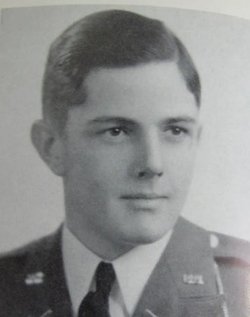
Award:
Burial Site: SFNC, Plot 6, 712
LIEUTENANT COLONEL THOMAS DANIEL HARRISON
Lt. Colonel Thomas D. Harrison was recognized for his exceptional leadership, courage and enormous self-sacrifice during the Korean War by being awarded the Distinguished Service Medal in 1955. At the time, it was the Air Force’s second-highest award, just after the Medal of Honor. He was also inducted into the New Mexico Military Institute Hall of Fame in 1986, from which he graduated high school in 1939.
Thomas D. Harrison served our nation as a fighter pilot in both World War II (Army Air Corps) and the Korean War (Air Force). He was shot down in both wars, and in World War II, he was injured and rescued by our Chinese allies, who treated his wounds and declared him a hero. In the Korean War, he was injured when he was shot down and was captured by the North Korean enemies. His leg was badly mangled, and it was ineptly amputated by his captors. Tom subsequently survived six operations on his remaining leg, which were performed without anesthesia in an effort to force from him crucial information which he never divulged. He endured inhumane torture for 27 months, first in a North Korean holding area and then in a POW camp operating under terms of the Geneva Convention, before his release in August 1953. He was hated and feared by both the North Koreans and Chinese Communists for his aggressive belligerence toward their demands while being held prisoner. His actions and his conduct under extreme duress and torture were instrumental in inspiring other prisoners of war with the will to resist the enemy.
Tom grew up in the small farming-railroad town of Clovis, New Mexico, and as a child, he was captivated by his father’s World War I experiences. He knew at an early age that not only did he want to emulate his father, an Army infantry officer, by serving in the Army but that he also wanted to become a pilot. The discipline, friendships he made, and coursework during high school at New Mexico Military Institute convinced him that he wanted a career in the military.
He received an appointment to West Point after high school and graduated early in order to serve in World War II. He was commissioned to serve in the Army Air Corps as a fighter pilot, deploying to Burma and China to serve in the 14th Air Force to defend the Republic of China. When North Korea invaded South Korea, Tom was deployed to Korea in 1950 to serve with the 16th Fighter Squadron. He flew the F-80 Shooting Star jet, and on May 21st, 1951, during a strafing run in which he dropped altitude (to 15 feet) to bomb the target, his plane was hit. He was unable to eject from the plane, but miraculously, the force of the explosion helped open his parachute. This time, he landed in enemy territory. Tom waved to his wingman to let him know he was alive. He was badly wounded and unable to walk, and he was captured by North Korean soldiers before help could arrive.
After being taken to a primitive North Korean holding area, Tom helped seven fellow prisoners escape, even though he knew he would receive horrible retribution because of it. In November 1951, he endured a forced prisoner march of 140 miles to POW Camp 2 clad only in light clothing during an extremely cold, snowy winter. Tom hobbled along on crude, makeshift crutches, frequently surrendering his place on an oxcart to fellow prisoners because he considered them more debilitated than he was. He wanted to save others as much as he wanted to live.
After he arrived in POW Camp 2, a fellow prisoner, Gerry Fink, was able to carve a wooden leg for Tom to use. He also carved the three-foot-tall crucifix that the prisoners used for worship service. The crucifix was carved in honor of Father Emil Kapaun, the priest in the camp who had helped so many of his fellow prisoners and who died in the camp.
Tom was released from POW Camp 2 in August 1953. In his wooden leg, Gerry Fink carved a hiding place for secret documents of the camp’s administrative records to be hidden and carried out of the camp by Tom. Unfortunately, the wooden leg was confiscated by camp officials prior to his release, but Gerry and Tom also hid another copy of the camp records in a hole carved in the grip of Tom’s crutches. He was able to turn that copy over to the Allies immediately upon securing his freedom.
There are many stories written by Tom about his time in the two camps. (These will soon be linked to this home page.) His compassion towards his fellow officers was never forgotten, nor did they forget the brutal torture and pain inflicted upon him because his captors could never break him. His courage helped give them courage. Tom never lost his faith in God nor his faith in others during his time as a prisoner of war.
What happened when Lt. Colonel Harrison’s plane was hit during his bombing raid in North Korea?
On May 21st, 1951, it was a foggy morning when he boarded his F-80 Shooting Star jet. Tom had a premonition about this flight. It felt different from the 75 missions he had flown before, but he put his thoughts aside and started the engine. He and three other pilots took off for a reconnaissance and strafing mission in order to interrupt the Chinese supply line. When Tom dropped his altitude to 15 feet to bomb the target, he was jolted by an explosion in the back of the plane. He had one choice: bail out. However, his throttle was stuck. He tried everything, including jumping out of the plane’s window, but the wind sucked him back inside. As the cockpit filled with smoke, he was struggling to steer the plane into friendly territory when he lost consciousness. The plane exploded, but somehow the force opened his parachute at the same time. Landing in enemy territory, he waved at his wingman, signaling to him that he was alive. Before help could arrive, Tom – bleeding and badly wounded – was captured by six North Korean soldiers.
Notes:
Biography for Thomas Harrison provided by his daughters, Lt. Col Joyce Harrison McCallister and Barbara Harrison Scharf, and his niece, Jan Collett.
- New Mexico Military Institute Hall of Fame in 1986
- “Thomas D. Harrison,” Albuquerque Journal, 24 April 1985, Newspapers.com
- com, LTC. Thomas D. Harrison, US Selected Military Registry, 1862- 1985.
- “Korean War Hero, Thomas D. Harrison.” Albuquerque Journal, 23 April 1985, Newspaper.com
Department of Veterans Affairs, Veterans Legacy Memorial, Find Your Veteran https://www.vlm.cem.va.gov/THOMASDHARRISON/248AFF1
Major Gerald Fink
www.nmajmh.org/education/individual-profiles/Gerald-Fink
Burial Location:
https://www.findagrave.com/memorial/182813377/gerald-fink
Images & Documents
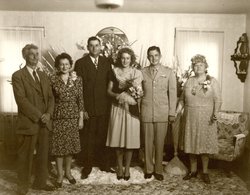
Thomas Harrison
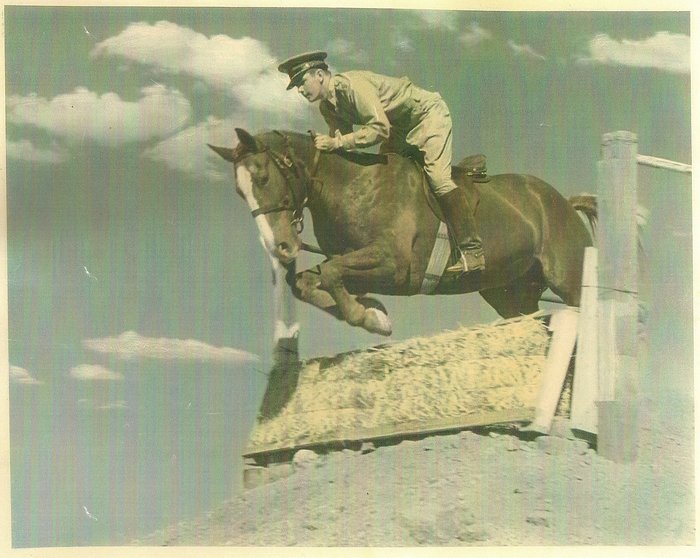
Thomas Harrison
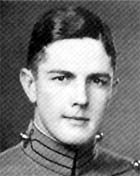
Thomas Harrison
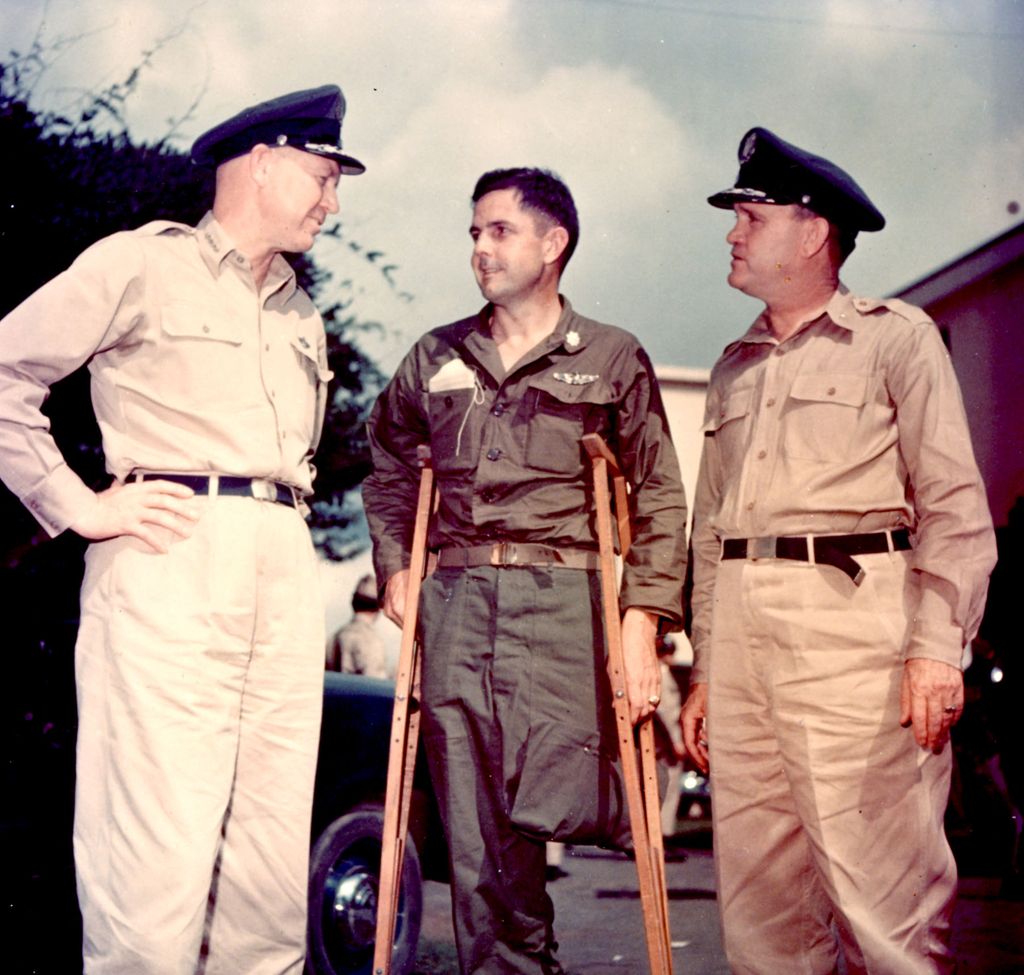
L1A/Operation Big Big Switch, Thomas Harrison

Thomas Harrison